Lysozyme Specification Checklist for Food Preservation
Grade and specification checklist for processors, formulators and resellers buying lysozyme: food vs oral-care grades, activity basis, documents, pilot checks and what to send for a quote.
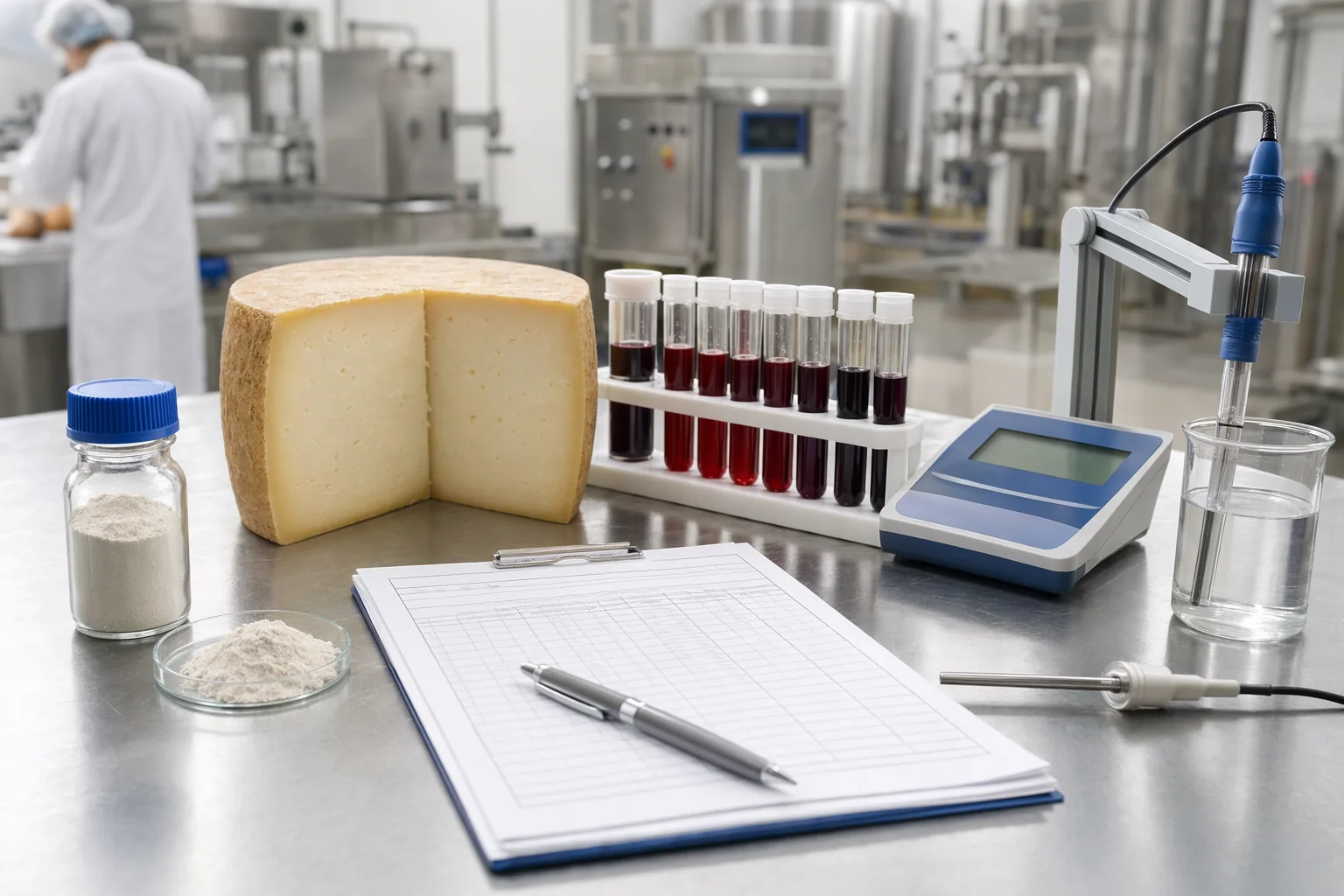
Buying the wrong lysozyme grade costs a trial, a delivery and weeks of validation. This checklist is for food and beverage processors, formulators and resellers who specify egg white lysozyme for preservation and need to keep it apart from oral-care or pharmaceutical grades. It covers what to compare, what to ask a supplier for, and what to send when you request a quote.
What Is Lysozyme and Why Grade Matters
Lysozyme is an antimicrobial enzyme protein widely sourced from egg white and used where control of certain Gram-positive bacteria is required. The lysozyme function is enzymatic hydrolysis of peptidoglycan in bacterial cell walls, which can help limit spoilage organisms in cheese, wine, and selected prepared foods. For procurement teams, the key comparison is not simply “what is lysozyme,” but which specification matches the intended process. Searches for lysozyme toothpaste, lysozyme 90mg, lysozyme chloride, or lysozyme mouthwash UK often relate to oral-care or pharmaceutical formats. Those grades may use different excipients, labeling, particle sizes, or regulatory assumptions than food preservation materials. Industrial buyers should request food-grade TDS, COA, SDS, allergen declaration, country-of-origin data, and recommended use ranges before trial ordering. Egg white lysozyme must also be reviewed for egg allergen management and local food additive requirements.
Typical source: egg white lysozyme protein • Main commercial role: control of selected Gram-positive spoilage bacteria • Common food categories: cheese, wine, and preservation systems • Do not treat oral-care grade descriptions as food-grade approval
Process Conditions to Compare Before Trial
A lysozyme enzyme specification should be evaluated against the real food matrix, not a generic activity number alone. A supplier's stated working range is a reference for comparing offers, not a promise for every product: our powder is specified for pH 6.0–9.0 and 37°C–50°C, while wine, brines and cheese milk each bring their own pH, salt, fat and polyphenol load. Temperature exposure matters as much as pH. Lysozyme is a protein, so prolonged heat can reduce activity; many processors add it after the main heat step, during cooling or blending, and confirm the result rather than assume it. Dose depends on the target organism, contact time, the matrix and the use level your market permits, so set it by a dose-response trial in your own product. Confirm performance by challenge testing rather than relying on supplier claims.
Validate pH in the finished matrix • Avoid unnecessary high-temperature holding after addition • Run dosage-response trials before commercial purchase • Check local additive limits and allergen labeling rules
Food Preservation vs Lysozyme Toothpaste Specifications
The focus keyword lysozyme toothpaste is useful for comparison because it highlights a frequent sourcing mistake: an enzyme described for oral-care use is not automatically suitable for food preservation. Toothpaste or mouthwash applications may emphasize oral formulation compatibility, taste masking, cosmetic documentation, or lysozyme chloride forms. Food processors need a different checklist: food-contact suitability, microbial limits, heavy metals, residual solvents where relevant, allergen declaration, GMO statement if required, and batch-to-batch activity. The same protein lysozyme can appear in multiple markets, but procurement acceptance depends on documentation and intended use. A food manufacturer should request a COA showing activity assay method, appearance, moisture, ash, microbiological counts, and contaminant limits. A TDS should define solubility, recommended addition point, pH tolerance, and storage. The SDS should support safe industrial handling, dust control, and worker exposure procedures during weighing and mixing.
Compare intended use, not only enzyme name • Confirm food-grade documentation before sampling • Review excipients and carriers carefully • Require batch-specific COA for every shipment
Pilot Validation and QC Checklist
Before approving lysozyme as a food preservative, run a structured pilot that mirrors commercial conditions. Prepare untreated control, low-dose, mid-dose, and high-dose variants using the same pH, salt, heat history, packaging, and storage temperature as production. Measure enzyme dispersion, turbidity, sedimentation, sensory effects, and target organism counts over shelf life. For wine, confirm impact on lactic acid bacteria and any effect on clarity or filtration. For cheese, assess late blowing risk, brine interactions, moisture, ripening profile, and organoleptic acceptance. QC checks should include activity confirmation, microbiological quality, moisture, appearance, foreign matter, and identity testing where feasible. Cost-in-use should be calculated per tonne of finished product or per batch, not per kilogram of enzyme. Include yield impact, waste reduction, reduced spoilage risk, labor, and any added analytical costs.
Use side-by-side controls and dosage laddering • Track microbial counts through shelf life • Evaluate sensory and processing effects • Calculate cost-in-use at finished-product level
Supplier Qualification for Industrial Buyers
Supplier qualification should verify that the lysozyme protein is consistently produced, documented, and supported for B2B food processing. Ask for recent COA examples from multiple lots to see normal variability in activity, moisture, microbiology, and appearance. The TDS should state storage conditions, shelf life, packaging, solubility, and recommended handling. The SDS should cover dust inhalation, personal protective equipment, spill cleanup, and transport classification. Buyers should also review allergen controls, traceability, change-notification procedures, lead time, minimum order quantity, sample availability, and technical support for pilot trials. Avoid relying on broad claims such as “natural preservative” without matrix-specific evidence. A qualified supplier should help interpret assay units, recommend starting dosage bands, and disclose whether the offered material is egg white lysozyme, lysozyme chloride, or another commercial form suitable for the intended food application.
Request COA, TDS, SDS, and allergen declaration • Review lot-to-lot activity consistency • Confirm change-control and traceability process • Assess technical support, lead time, and MOQ
Important Distinctions from Oral-Care and Pharma Grades
Searches for lysozyme dentifrice, lysozyme mouthwash UK, lysozyme chloride, or lysozyme 90mg often relate to oral-care, pharmaceutical, or consumer product contexts. Those terms can be useful for market research, but they do not define a food-preservation specification. Food manufacturers should not use medical dosage language or supplement-style claims when procuring lysozyme for processing. Instead, specify food-grade status, source, activity, microbiology, allergen documentation, and suitability for the intended food application. Pharmaceutical-grade or dentifrice-grade material may have different excipients, particle-size targets, regulatory positioning, or documentation packages. Conversely, food-grade egg white lysozyme may not be suitable for oral-care or pharmaceutical manufacturing. Keep procurement, regulatory, and label claims aligned with the actual application and jurisdiction.
Do not use consumer dosage terms as food specs • Check excipients and intended-use statements • Separate food, oral-care, and pharmaceutical requirements • Avoid health or therapeutic claims in food applications
Technical Buying Checklist
1. Intended use: food or beverage preservation, with the target market named; not oral-care or pharmaceutical use.
2. Source and identity: egg white lysozyme or lysozyme chloride, with an allergen declaration for egg-derived material.
3. Activity and assay: units per mg and the assay behind them; ours is 20,000–100,000 U/mg by the Micrococcus lysodeikticus method, so ask other offers for the same basis.
4. Documents: COA for every lot.
5. Form and storage: white crystalline powder, stored sealed, cool and dry.
6. Pack and quantity: 1 kg / 5 kg / 25 kg packs, MOQ 1 kg.
7. Trial plan: untreated control plus at least three dose levels in your own product before a supply agreement.
Request a Quote for Food-Grade Lysozyme
Send the product (food-grade lysozyme and the activity grade), the quantity per order or per year, the pack size, the destination country and the application. If you resell or distribute, say so and name the end use your customers need documents for. We reply within 24 hours with sample availability and a quote; price is quoted per order.
Lysozyme for Research & Industry
Need Lysozyme for your lab or production process?
ISO 9001 certified · Food-grade & research-grade · Ships to 80+ countries
Frequently Asked Questions
Is lysozyme toothpaste grade suitable for food preservation?
Not automatically. Lysozyme toothpaste materials may be designed for oral-care formulation requirements, while food preservation requires food-grade documentation, allergen review, microbial limits, and matrix-specific validation. The enzyme name may be similar, but excipients, intended use, and regulatory assumptions can differ. Ask the supplier for COA, TDS, SDS, allergen declaration, and a written statement that the material is suitable for the intended food application.
What is the main lysozyme function in food systems?
The primary lysozyme function is to hydrolyze peptidoglycan in bacterial cell walls, mainly affecting selected Gram-positive organisms. In food preservation, this can help control spoilage bacteria in applications such as cheese and wine when conditions are favorable. Performance depends on pH, temperature, dosage, contact time, organism sensitivity, and the food matrix. It should be validated through pilot testing and microbiological shelf-life studies.
How should buyers compare lysozyme enzyme suppliers?
Compare suppliers by activity specification, assay method, batch consistency, documentation quality, allergen controls, traceability, lead time, and technical support. Price per kilogram can be misleading if activity, moisture, or dosage recommendations differ. Request recent COAs, a complete TDS, SDS, sample quantity for pilot work, and change-control terms. Calculate cost-in-use at the finished-product level rather than relying only on quoted unit price.
What dosage should be used for lysozyme food preservative trials?
Dosage must be validated in the actual product and checked against local regulations. Start from the supplier's recommendation for your application, then run an untreated control and several dose levels, and measure microbial counts, sensory impact, clarity, texture and shelf-life performance before scale-up.
Is lysozyme chloride the same as egg white lysozyme?
Lysozyme chloride generally refers to a salt form often seen in pharmaceutical or oral-care contexts, while egg white lysozyme is a common commercial source for food applications. They are related to the lysozyme protein, but grade, excipients, documentation, and intended use may differ. For food preservation purchasing, confirm exact identity, source, food suitability, allergen status, and batch specifications before comparing it with standard food-grade lysozyme.
Is lysozyme mouthwash UK the same product as food-grade lysozyme?
No. A search for lysozyme mouthwash UK may lead to consumer oral-care or supplement contexts, but food manufacturers need a food-grade industrial enzyme with appropriate documentation. Do not transfer mouthwash or lysozyme 90mg consumer dosing into food production. For B2B use, qualify the supplier, confirm source and allergen status, review COA/TDS/SDS, and validate the dose in the actual food matrix.
Related: Lysozyme for antimicrobial control in food systems
Request a lysozyme specification review, sample plan, and cost-in-use comparison for your food preservation process. See our application page for Lysozyme for antimicrobial control in food systems for specs, MOQ, and a free 50 g sample.
Contact Us to Contributehello@mail.enzymedesk.com